Reclaiming the Masjid: A Qur’anic Institution Beyond Architecture and Control
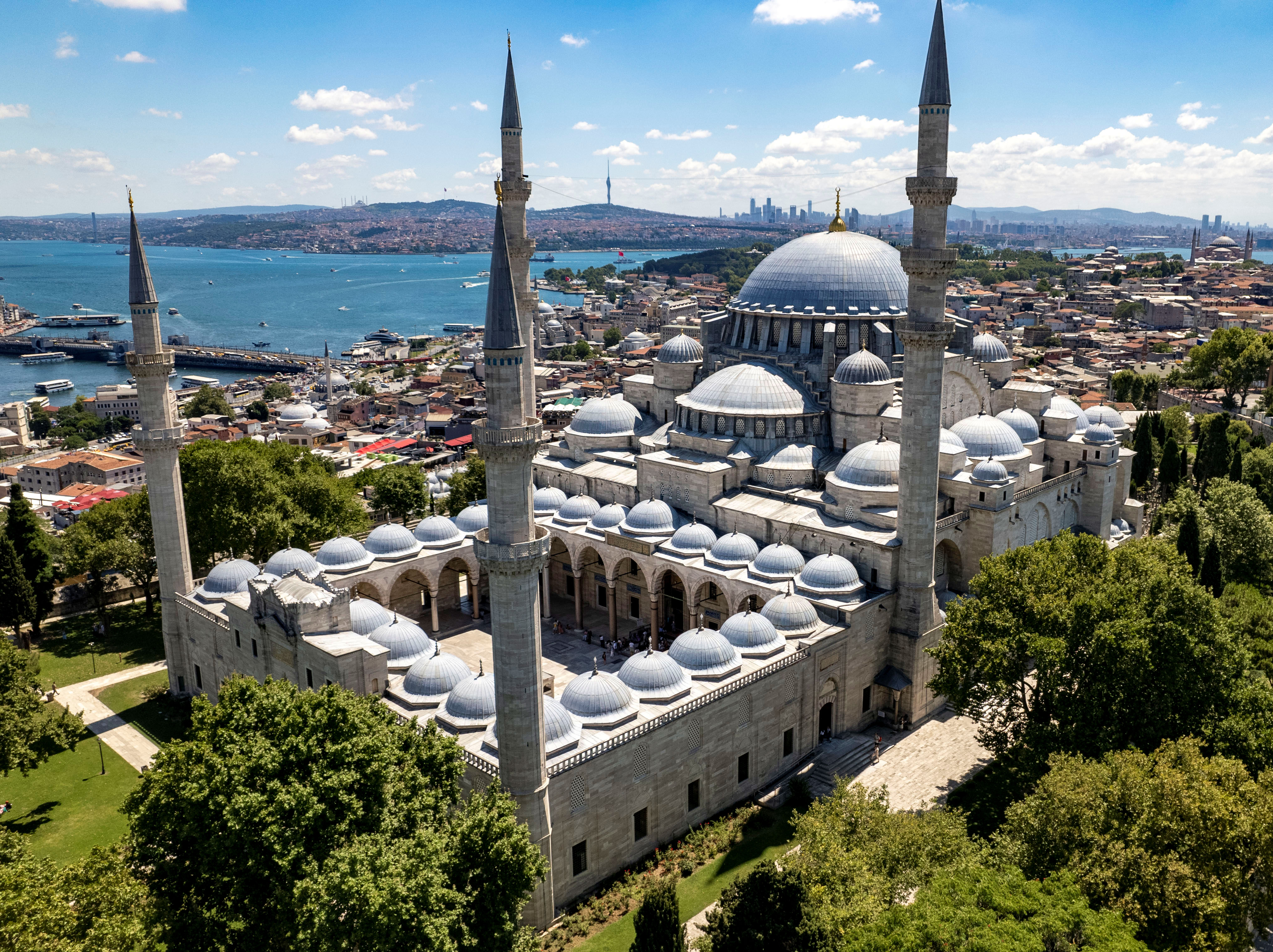
1) Drift from Qur’anic foundations happens through inherited assumptions, not revelation
The contemporary understanding of the masjid has drifted far from its Qur’anic foundation—often shaped by inherited practices, majority habits, and historical layering that substitute tradition for revelation. The Qur’an repeatedly warns against following what is inherited without proof: “Follow what God has sent down… ‘No, we will follow what we found our fathers doing!’” (2:170). The same critique is repeated when people are invited “to what God has sent down” and refuse in favor of ancestral norms (5:104). It also cautions that following “most of those on the earth” leads away from God’s path because they follow conjecture (6:116).
2) The masjid is defined by sujūd and exclusive ownership—belonging to Allah alone
In the Qur’an, a masjid is not defined by bricks or design, but by submission to Allah alone. This exclusivity is stated directly: “And the temples are for God, so do not call on anyone with God” (72:18). The masjid cannot be owned—ideologically or politically—by sects, clerics, donors, or states, because its purpose is singular: devotion without partners. This same principle is reinforced when God condemns partners who “decree… a system which has not been authorized by God” (42:21), and declares: “The judgment is for none except God” (12:40). When religious authority becomes a human monopoly, it risks becoming “lords instead of God” (9:31).
3) A Qur’anic masjid resists hierarchy and spectacle because righteousness is not outward form
Because the masjid is defined by purpose, not appearance, the Qur’an consistently de-centers outward form and ritual display. It explicitly states that righteousness is not a matter of directional symbolism: “Piety is not to turn your faces towards the east and the west…” (2:177). It also rejects the idea that ceremonial offerings or outward displays are what reach God: “Neither their meat nor their blood reaches God, but… righteousness from you” (22:37). Even etiquette at temples is framed as modesty and restraint—not grandeur: “Dress nicely at every temple… do not overindulge” (7:31). And the Qur’an’s criterion for honor is not status or position, but righteousness: “the most honorable… is the most righteous” (49:13).
4) The masjid’s heartbeat is continuous Qur’an engagement—reflection, study, and open examination
The true life of the masjid lies in sustained engagement with the Qur’an. The Qur’an describes itself as a blessed Book “so that they may reflect upon its revelations” (38:29), and repeatedly challenges communities: “Do they not reflect upon the Qur’an?” (47:24; also 4:82). This engagement necessarily includes listening, comparison, and discerning the best understanding: “They listen… and then follow the best of it” (39:18). A masjid culture that discourages questioning or locks interpretation behind permanent gatekeepers contradicts the Qur’an’s own demand for reflection.
5) No clerical monopoly: guidance is addressed to the community, and God’s Book is the authority
A Qur’anic masjid cannot become an instrument of clerical control because the Qur’an rejects religious intermediaries who claim lordship or exclusive authority. It warns against elevating “Priests and Monks to be lords instead of God” (9:31). It also declares the Book to be the decisive reference: “He has sent down to you the Book fully detailed” (6:114). And it condemns those who commodify revelation: “do not purchase with My revelations a cheap gain” (2:41), and “those who conceal… the Book and purchase with it a cheap price…” (2:174; also 3:187).
6) Ṣalāt as “the Connection”: a lived commitment that shapes conduct, not choreography detached from ethics
Within this framework, ṣalāt (rendered as “the Connection”) is not reduced to a ritual performance detached from behavior. Its purpose is remembrance and alignment: “hold the Connection for My remembrance” (20:14). It is explicitly tied to moral outcomes: “the Connection prohibits immorality and vice” (29:45). The Qur’an also anchors it in time and public life—indicating structured communal rhythm: “Hold the Connection… at two parts of the day…” (11:114), “the reading at dawn is witnessed” (17:78), and communal congregation is linked to “the remembrance of God” with a return to work afterward (62:9–10). This grounds ṣalāt as a living process that shapes ethics and community—not a ritual disconnected from justice.
7) The masjid naturally becomes a center of consultation and ethical governance
Because the Qur’an ties guidance to communal responsibility, the masjid becomes a place where public affairs are handled with transparency and consultation: “their affairs are conducted by mutual consultation” (42:38). Even the Prophet is commanded to “consult them in the matter” (3:159). Governance is inseparable from justice: “if you judge between the people, then you shall judge with justice” (4:58), “stand… as witnesses for justice” (5:8), and “stand with justice… even if against yourselves” (4:135). A masjid that hosts worship but ignores justice contradicts the Qur’an’s governance ethic.
8) Social welfare is not “extra”—it is part of what it means to build and maintain Allah’s masjid
The Qur’an defines the building/maintenance of God’s temples through faith, ṣalāt/Connection, and zakāt/purification: “the temples of God are built by… he holds the Connection, and… contributes towards purification” (9:18). Purification spending is not vague: charities are for “the poor… the needy… those in debt… and the wayfarer” (9:60), and spending is directed to “relatives… orphans… needy… wayfarer” (2:215). The Qur’an condemns religiosity that neglects social care: mistreating the orphan and not encouraging feeding the poor (107:2–3), and it condemns performative “connecting” that refuses basic aid (107:4–7). A Qur’anic masjid therefore operationalizes welfare as a core function, not a side charity.
9) Education is comprehensive, non-hierarchical, and oriented toward service
The masjid’s learning function is rooted in revelation’s first command: “Read in the name of your Lord” (96:1). The Qur’an elevates knowledge without creating a priesthood: “Are those who know equal to those who do not know?” (39:9), and “God will raise… those who acquire knowledge” (58:11). Knowledge is pursued with humility: “My Lord, increase my knowledge” (20:114). This supports a masjid culture of learning that serves people and strengthens moral clarity—not one that converts knowledge into authority over others.
10) Access is open; what is condemned is obstruction and control
The Qur’an condemns those who prevent worship and Qur’anic remembrance in God’s temples: “who are more wicked than those who prevent the temples of God that His name be mentioned in them” (2:114). It also recognizes temples as places where “the name of God is frequently mentioned” (22:40). At the same time, it disqualifies false authority from maintaining the institution: it criticizes the polytheists’ claim to build God’s temples while bearing witness to rejection (9:17). So the Qur’anic concern is not creating human gatekeeping privileges, but preventing corruption, obstruction, and ideological capture.
11) Leadership is earned by righteousness and accountability, not titles and permanent religious offices
The Qur’an rejects the idea that a human being can turn divine knowledge into personal authority: “It is not for any mortal… then he would say… ‘Be servants to me rather than God!’” (3:79). Honor is explicitly tied to righteousness, not rank: “the most honorable… is the most righteous” (49:13). Community integrity is maintained through reconciliation and justice (49:10, 49:9). Leadership in a Qur’anic masjid therefore remains functional, accountable, and grounded in service—not an office insulated by sanctity.
12) Financing must protect independence: no monetized religion, no unjust wealth, no donor privilege
A masjid’s independence is protected by Qur’anic financial ethics: “do not consume your money between you unjustly” (4:29) and “do not consume your money… unjustly by bribing the decision makers” (2:188). It condemns religious profiteering and hoarding: “many of the Priests and Monks consume the money… in falsehood” (9:34). It also warns against selling revelation for gain (2:41, 2:174). Transparency and public accountability are reinforced by the command to document obligations: “if you borrow… then you shall record it” (2:282). These principles support a masjid funded by voluntary giving and purification spending—managed openly—without turning donors into rulers.
13) Unity is the default; “masjids of division” are explicitly condemned
The Qur’an repeatedly prioritizes unity: “hold firmly to the rope of God… and do not be separated” (3:103), “this is your nation, one nation” (23:52), and “do not divide in it” (42:13). It condemns sectarian fragmentation: “Those who have divided their system and become sects…” (6:159). Most directly, it warns about a temple established to “divide between the believers” (9:107) and contrasts it with a temple “founded on righteousness” (9:108). Multiplicity born of rivalry is therefore treated as a symptom of fracture, not devotion.
14) A Qur’anic masjid is a living civic institution: remembrance, justice, consultation, service
Taken together, the Qur’an frames the masjid (temple) as a place of God-centered devotion (72:18), remembrance and Connection (20:14, 62:9), reflection on revelation (38:29, 4:82), justice in public affairs (4:58, 5:8), mutual consultation (42:38), and care for the vulnerable (9:60, 107:2–7). Where this function exists, a masjid exists—regardless of architecture. Where it does not, no building can substitute for Qur’anic purpose.
Written for www.free-minds.org